Torfaen uses far more electricity than it produces — and that gap matters in the face of climate change.
In 2023, Torfaen consumed around 31.3 kilotonnes of oil equivalent (ktoe)of electricity, which equates to approximately 364 GWh per year. This electricity powers our homes, schools, hospitals, businesses and public services — but almost all of it is generated outside the county.¹
How much clean electricity does Torfaen generate?
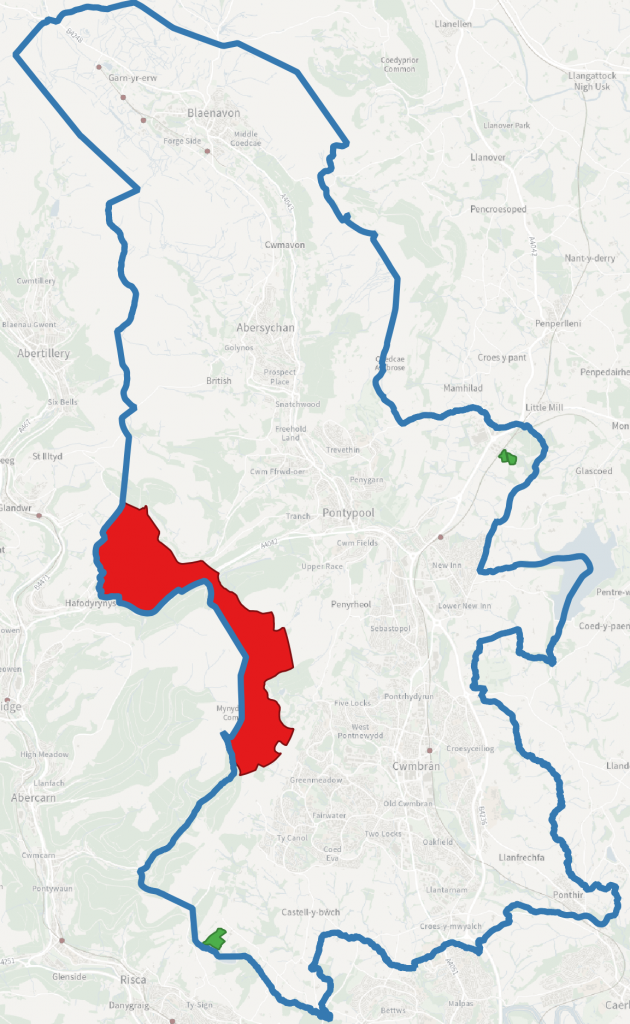
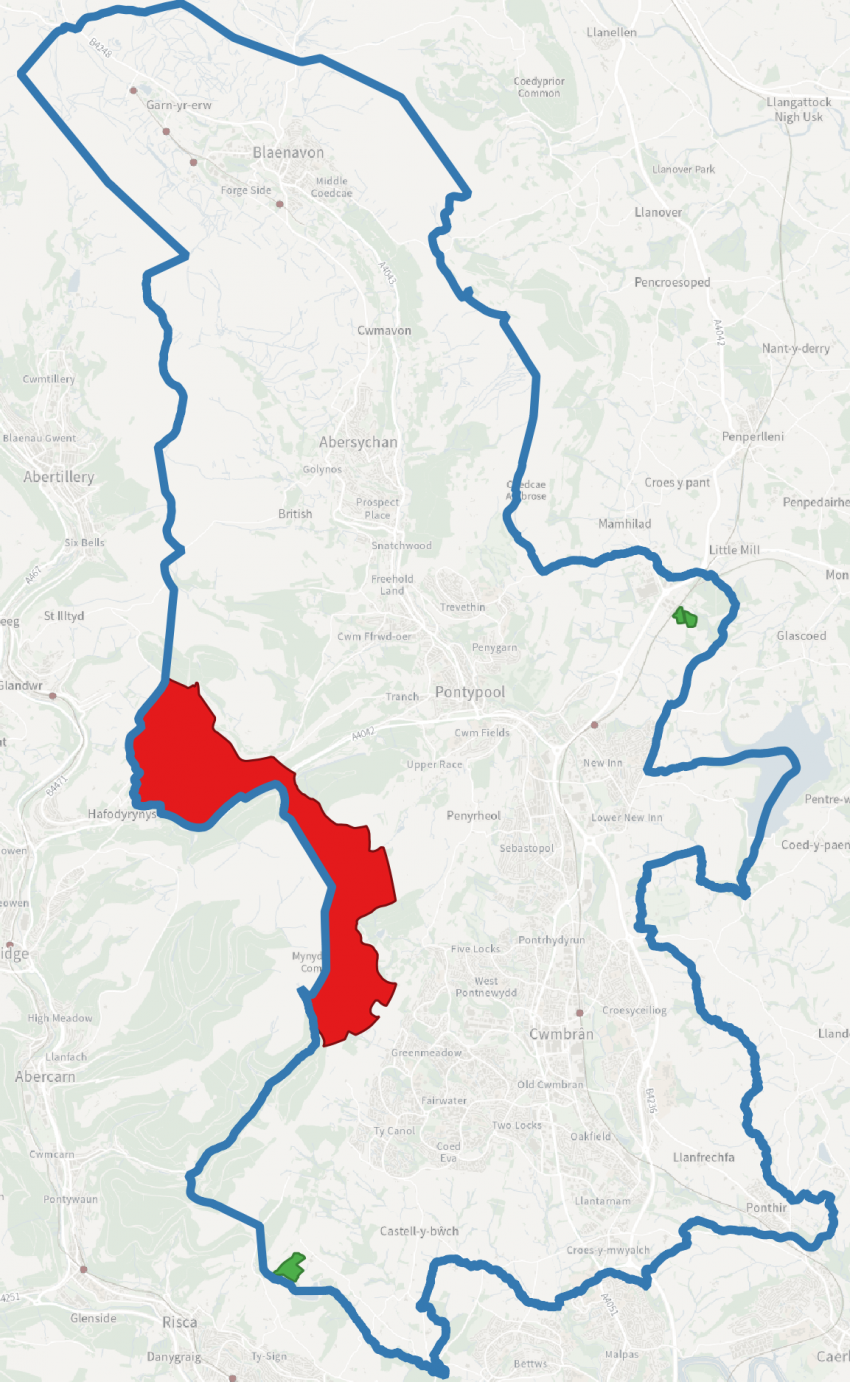
Figure 1 : This is a map of Torfaen, the blue line showing the boundary. The green shapes are current land being used to generate renewable eletricity. The red is land that has been marked for potential sites for wind generation.
At present, Torfaen has:
- No operational wind farms
- Two operational solar farms, each with a capacity of 5 MW
Based on typical UK solar performance, these two solar farms generate around 9–10 GWh of electricity per year, supplying only 2–3% of Torfaen’s annual electricity demand.²³
Domestic rooftop solar makes a similar contribution. Torfaen currently has around 2,850 domestic solar PV installations, with a combined capacity of approximately 9.4 MW, meaning around 7–8% of households have rooftop solar.⁴Combined, large-scale and domestic solar generate approximately 18–19 GWh per year, meaning only about 5% of the electricity Torfaen uses is currently generated locally.
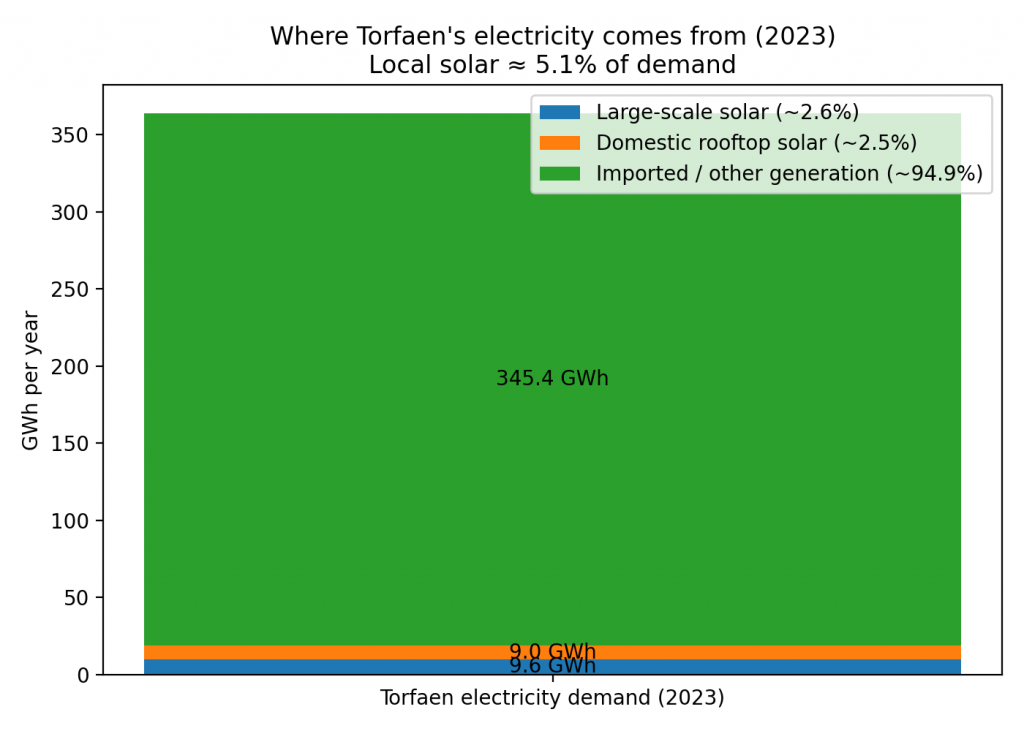
Figure 2 : this graph shows the splits of where Torfaen gets its energy seperate by large-scale solar, domestic rooftop solar on resisdents and business’s buildings and the rest is imported.
How does this compare to Wales?
This matters because Wales as a whole is close to generating enough electricity to meet its annual demand, largely due to wind, solar and hydro.⁵ Some parts of Wales generate far more electricity than they consume.Torfaen, by contrast, is a net importer of electricity, relying on generation elsewhere for around 95% of what it uses. While solar uptake in Torfaen is similar to nearby urban authorities such as Newport and Caerphilly, it remains well below levels seen in more rural Welsh counties.
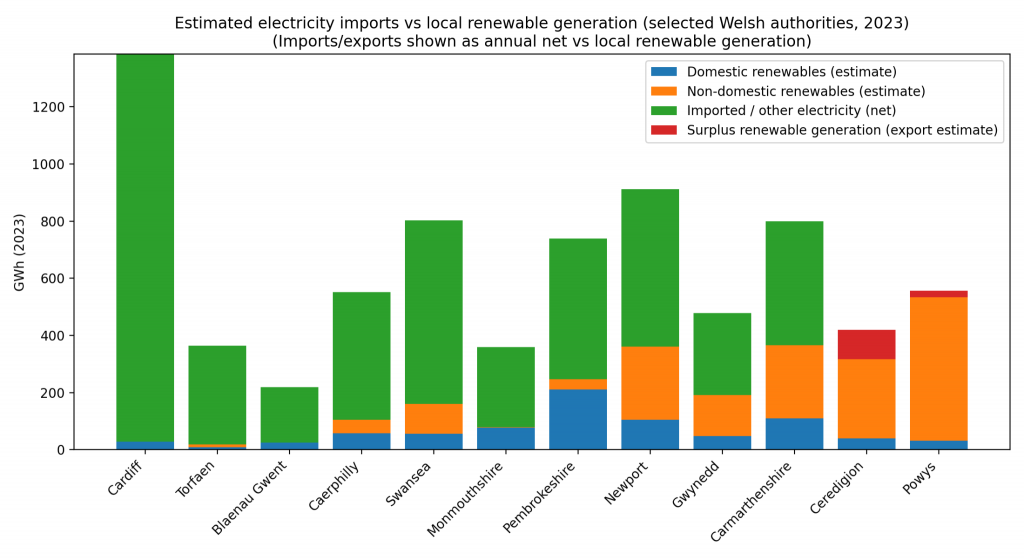
Figure 3: This graph shows estimated eletric splits of imported vs generated within the county. This is split between domestic renewables and non-domestic and also shows any surplus energy the county may produce.
New wind farm proposals — and why context matters
There have been several recent proposals for wind farms in and near Torfaen, many of which have faced strong local opposition and, in some cases, objections from the council. Local concerns about landscape, heritage and visual impact are valid and deserve careful consideration.
However, these proposals should also be viewed in the context of Torfaen’s very low level of local renewable generation. With no operational wind farms and only around 5% of electricity demand met locally, rejecting all new renewable development effectively means continuing to rely on other communities to host the infrastructure needed to power our homes and businesses.
If Torfaen is serious about responding to climate change, some level of local renewable energy development will be unavoidable. The real question is not whether change should happen, but how it can happen in a way that is fair, sensitive, and delivers benefits to local communities.
The opportunity in renewables
This challenge is also an opportunity. Torfaen could significantly expand clean energy generation through:
- Solar on public buildings, schools and leisure centres
- Commercial and industrial rooftops
- Community-owned energy projects
- Carefully sited wind and solar developments
- Energy storage to support local networks
With only 7–8% of homes currently having solar PV, there is substantial room for growth without additional land take.
A call to action
Climate change demands action at every level. That means:
- Decision-makers enabling renewable energy rather than blocking it by default
- Communities engaging constructively with proposals
- Individuals recognising the role they can play
Torfaen already consumes hundreds of gigawatt-hours of electricity every year. The question is not whether we use energy — it is where that energy comes from.
If we are serious about climate action, resilience and fairness, Torfaen must do far more to generate clean energy locally — and now is the time to push for it.
References
- DESNZ – Total final energy consumption at regional and local authority level: 2005–2023
https://www.gov.uk/government/statistics/total-final-energy-consumption-at-regional-and-local-authority-level-2005-to-2023 - UK Government – Solar photovoltaics deployment
https://www.gov.uk/government/statistics/solar-photovoltaics-deployment - UK Government – Feed-in Tariff load factor analysis (solar PV) https://www.gov.uk/government/collections/feed-in-tariff-statistics
- UK Government – Solar PV deployment by local authority https://www.gov.uk/government/statistics/solar-photovoltaics-deployment
Welsh Government – Energy Generation in Wales
https://www.gov.wales/energy-generation-wales